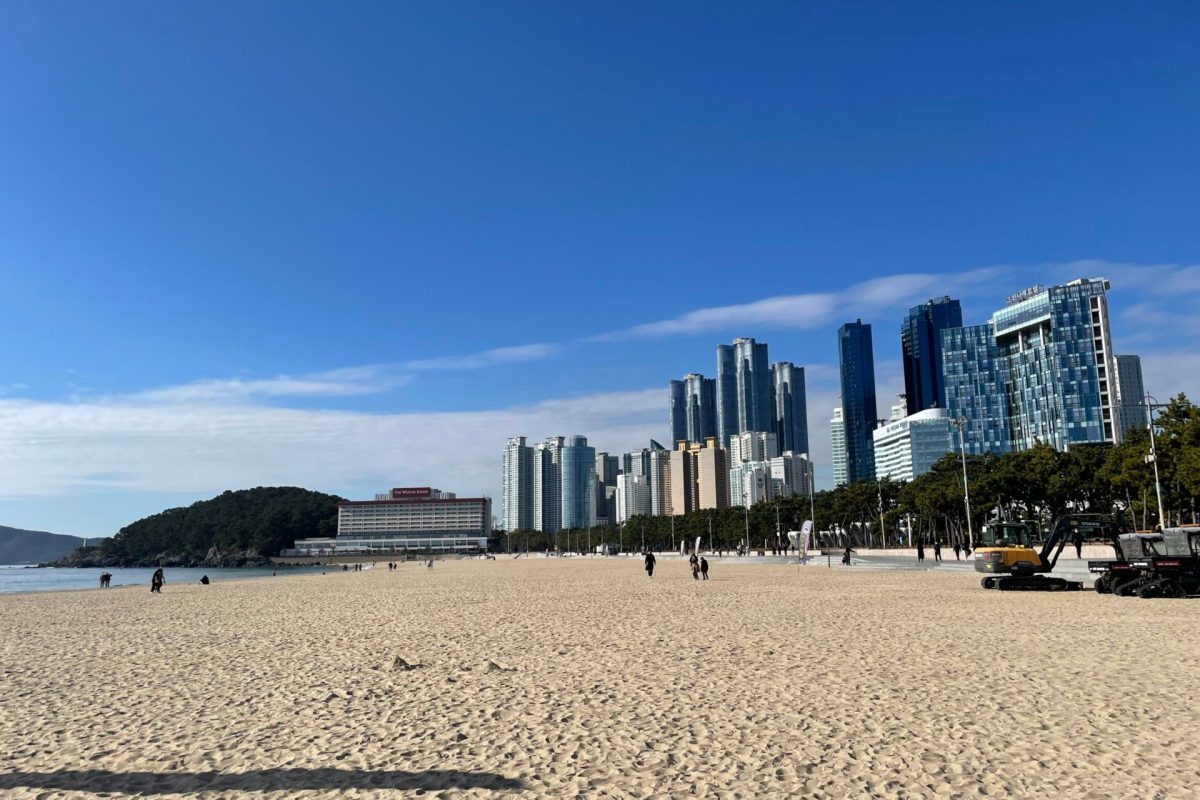
Now that summer is in full swing, Haeundae beach is super crowded.
Haeundae Beach is one of the most popular summer travel destinations here in Korea, but have you ever wondered how Haeundae beach got its name or what the word “Haeundae” really means?
Haeundae beach was named after the 9th century Silla scholar and politician Choi Chiwon (최치원).
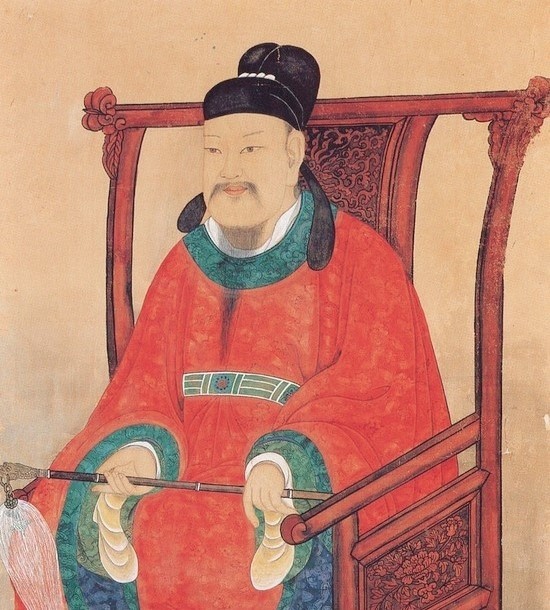
So let me tell you a little bit about who he was.
Choi Chiwon was born in 857 in the small town of Gyeongju, which was then the capitol of Silla.


At age 12, he moved to study in China. The Tang Dynasty was also very prevalent during this period.
The Tang Dynasty was one of the greatest dynasties in Chinese history.
Foreigners were even given the opportunity to obtain work permits.
When Choi Chiwon was 18, he passed the civil service examination for non-Chinese, and he quickly rose to a high office position from there.
That time in Korea was known as the age of Unified Shilla.
But unfortunately, the golden age of unified Silla was in decline. Corruption was beginning to taint their society.
Choi Chiwon put it upon himself to help correct what had been broken.
With a plan to make a difference, he came back to Korea.
After returning to Korea, he became an instructor at the Shilla’s Confucian Hallim Academy.
He was later appointed to the chief envoy of a diplomatic association with Tang Dynasty. Soon after, the Tang Dynasty fell and Choi Chiwon was unable to travel back to China.
Back then in Shilla, there was a bone rank status system, called 골품제도.
This was also known as “the Caste System of South Korea.”


It was used in the Shilla Kindom to publicize a person’s political and social status, place of birth, and where a person belonged.
Based on this system, some people were allowed to apply for select jobs or live in certain areas, while others could not.
People were not allowed to move from one class to the other under this bone rank status system, which resulted in a stagnation of talent.
Choi Chiwon belonged to 6두품 class, which meant he was qualified to hold scholarly positions in the royal offices, but not able to become a high minister.
He was restricted to a particular level of office no matter the circumstances.
He then submitted the “Ten Urgent Points of Reform” to Queen Jinseong (진성) in 894, only to have it be rejected.

It was a tough time for Choi, because he had to accept that there was a ‘glass ceiling’ over the official bone-rank status system of Shilla.
He ended up quitting his quest to fix society and instead unlocked a new passion for traveling the country.
He left his post at Gyeongju to allow himself to freely travel.
After leaving Gyeongju (경주), Choi Chiwon wandered around the southern coastal region of the Korean peninsula, including Ulsan, Busan and more.
There are many places that have been associated with him along the southern coast.
Along with Haeundae, Cheongyongdae (청룡대), which is situated on the border with Gangseo-gu (강서구), and Molundae (몰운대) near Dadaepo beach all got their names from Choi Chiwon.


When he came to Haeundae, he wandered around Dongbaek island.
It is said that he was so fascinated with the beautiful view of Haeundae Beach from on top of a hill on Dongbaek Island, that he engraved one of his literary names, Haeun, on a rock there.
The name Haeun means ‘Sea Cloud’.
So, this is the story of how he named the beach “Haeundae” over 1,000 years ago.


Fun fact: A piece of Choi Chi-won’s calligraphy, which he engraved on a rock at Haeundae, still exists.
A lot of people go to Dongbaek Island for a nice run or walk, but not everyone knows that it is still home to a statue of Choi Chi-won that is located at the top of the park.
Only a few records remain from Choi Chiwon’s middle to late years.
In his final years, it seems that Chiwon turned more towards Buddhism and became a scholar, residing in and around Haeinsa (해인사) Temple located in Hapcheon (합천).


 Busan Travel & Living