It’s September already, and soon it will be starting to feel like autumn. There is a Korean expression that describes the season of autumn.
It is “Chun-go-ma-bi (천고마비)”. People say, “it is the time of Chun-go-ma-bi.” Have you heard this expression before, and can you guess its meaning?
Chun – Sky
Go – High
Ma – Horse
Bi – Fat
It literally translates to, “the sky is high while the horse gains weight.” Simply put, it means “autumn is a good season to go outside and eat!” Since autumn is the season of harvesting goods, there is a lot of good food to enjoy.
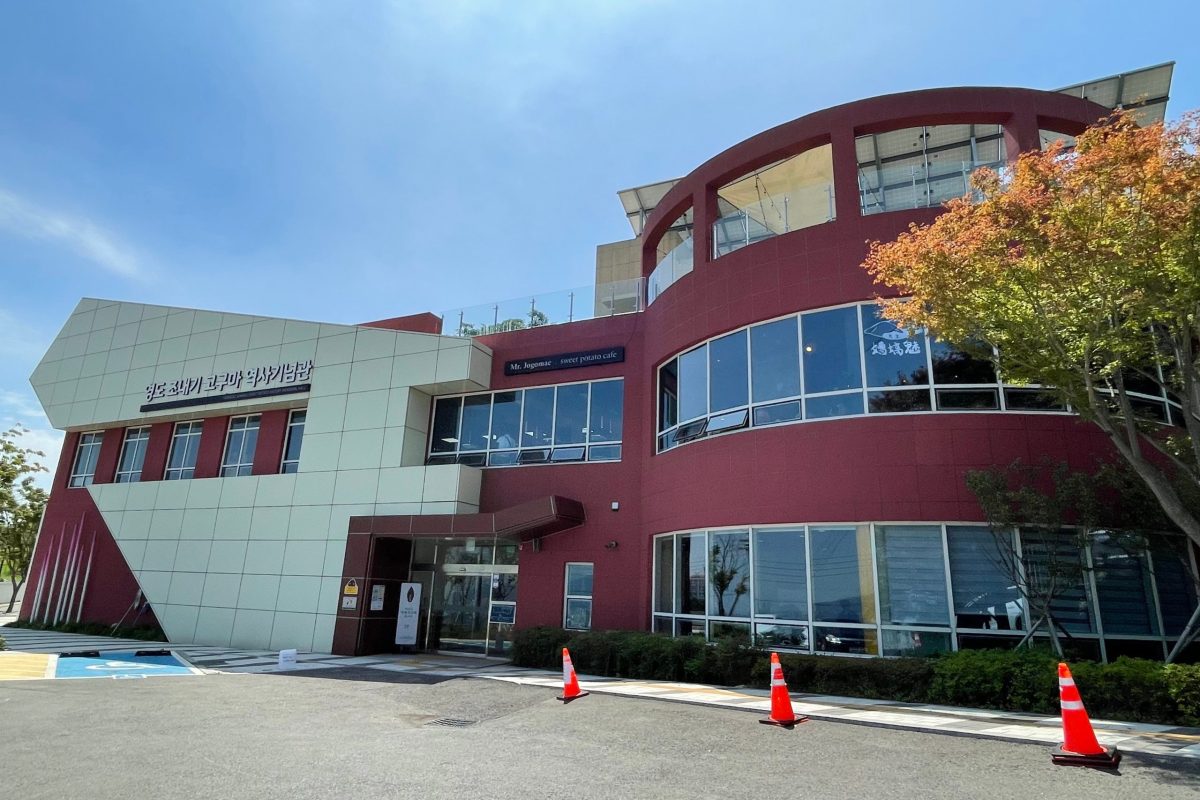
By the way, did you know that there is a sweet potato history museum in Busan? Well, there is! So let me tell you about the history of how sweet potatoes came to Busan.


Yeongdo Jonaegi Sweet Potato History Museum
It goes back to 1764 during the reign of King Yeongjo (영조) of the Korean Joseon Dynasty.


King Yeongjo
Joseon Tongsinsas were then diplomatic envoys sent to Japan at the request of Japanese officials.
This group was made up of diplomats, scholars, artists, and doctors. The group toured Japan – from Tsuhima Island all the way to Edo, which is today’s Tokyo. According to records, one group of Joseon Tongsinsa consisted of around 450 people, and they were all well-liked by their neighbors.
They were like the rock start we have today as they set international trends. Because of them, hundreds of horses, art pieces, stationery, books, and agriculture products were brought to Japan. In return, they we able to bring sweet potatoes from Japan.


Joseon Tongsinsa
During the 40th year of King Yeongjo’s rule, King Yeongjo sent a diplomatic mission to Japan. Jo Eum (조엄) was the chief envoy over the mission. According to reports, 477 people traveled with him. Jo eum soon found sweet potatoes in the northern parts of the Tsushima Island. He loved the taste of them and thought that if Joseon people could grow sweet potatoes in their backyard, they would not have to worry about having enough food to eat.
So, he had one of his officials named Lee Unghyuk (이응혁) carry a few sweet potato slips back with him. (Did you know that sweet potatoes do not have seeds like most other vegetables. Instead, they produce something called a slip, which can be planted like a seed!) However, Lee failed to keep the slips from rotting on his way back home.


Meanwhile, the Dongrae (동래) city official, Kang Pilly (강필리) found out that Jo had discovered
sweet potatoes in the northern parts of the Tsushima Island and that the sweet potato slips carried by Lee could not be replanted. He could not wait to grow and enjoy his own sweet potatoes. He had people go and retrieve more slips from Tsushima Island. This time the slips made it back to Busan without any issues.
The first sweet potatoes were planted in the Yeongdo-gu district of Busan in the spring of 1765 in the Naegi area. To remember Jo’s effort in bringing sweet potatoes to Korea, Kang decided to put his last name “Jo” before “Naegi.” That is how the sweet potatoes were named “Jonaegi sweet potatoes.” People believed that sweet potatoes grown in that area tasted the best. That’s why Jonaegi sweet potatoes are still the most popular sweet potatoes in supermarkets in Korea.


Meanwhile, the Dongrae city official named Kang spent a lot of time researching sweet potatoes.
He even published his research in a book. The title of the book was “Gamjeobo (감저보).” Sweet potatoes are now called Goguma (고구마), but back then, they used to be called Gamjeo (감저). Interestingly, potatoes are called Gamja in Korean. So, when sweet potatoes were first brought to Korea, people probably named the sweet potatoes Gamjeo by changing one vowel in the word Gamja.


Anyways, thanks to Kang’s book, people from different regions have started to grow sweet potatoes.
So check out the Jonaegi Sweet Potato History Museum located in Yeongdo to find more information. There is also a café that serves sweet potato inspired drinks and baked goods. My favorite is the homemade soy milk served in a kettle! Twice a month, a cooking class is held for kids to join.
Address: Cherry Blossom Road 75, Yeongdo-gu, Busan
Hours: 10 am to 6 pm (Closed on Mondays and national holidays)
Admission: Free
How to get there: Take bus 101 at Busan Train Station. Get off at Yeongdo Bridge. Transfer to village bus number 7 at 청학 [Cheonghak] gas station and then get off at 동조 Dongjo Regency. (You will climb one of the steepest hills on your way to the museum!  )
)


 Busan Travel & Living