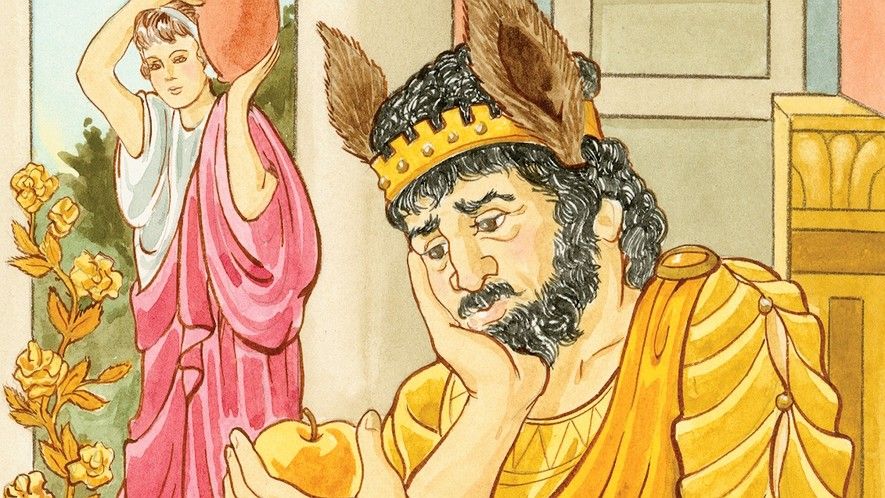
I have always thought that the story titled, “The King’s Ear, The Donkey’s Ear” was a traditional Korean folk tale, but it turns out that it originates from Greek mythology.
Anyway, the story that I grew up hearing goes like…
There was once a king whose ears were awkwardly large. He was embarrassed of his large ears, so he tried to hide them in his hat. The king was able to keep his ears a secret from everyone but his barber.
The barber was sworn to secrecy, but despite his best efforts, all he wanted to do was gossip. One day, he went to an empty bamboo forest and shouted, “the king has donkey ears!” Broadcasting the king’s secret into an empty bamboo forest made the barber feel more at ease.


However, as the wind blew, the exclamation traveled into the nearby town. Soon everyone knew that the king had donkey ears.
The story ends with the king unable to keep his secret from the public anymore. After he revealed his large ears to his people, a weight was lifted from his shoulders. He came to realize that his large ears could be used to help him hear the voices of his people better.
So, when we Koreans have something to gossip about, we sometimes start the conversation by saying, “나 임금님 귀 당나귀 귀 하나 해도 돼?” This means, “hey, can I tell you a king’s ear, the donkey’s ear?”, also meaning, “can I tell you a piece of gossip?”
This is the new idiom for today, but let’s not overuse it… 


 Busan Travel & Living