Korean Idiom: The King’s Ear, The Donkey’s Ear

I have always thought that the story titled, “The King’s Ear, The Donkey’s Ear” was a traditional Korean folk tale, but it turns out that it originates from Greek mythology.

Anyway, the story that I grew up hearing goes like…

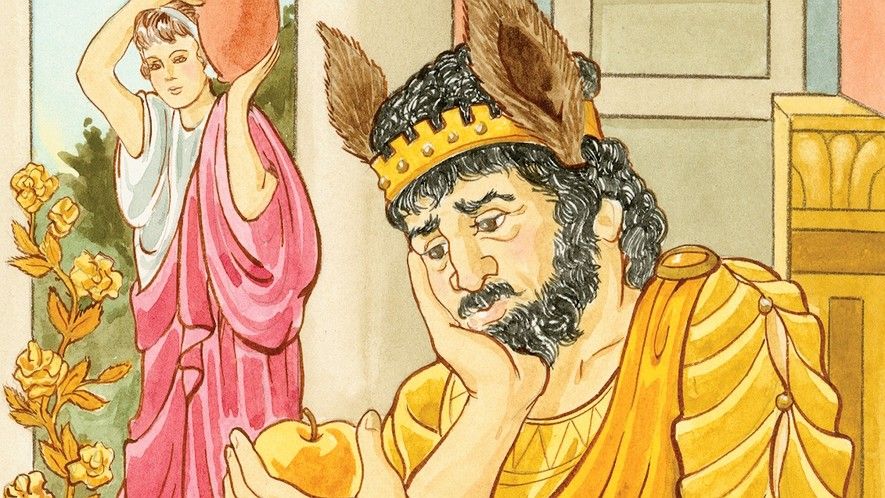
There was once a king whose ears were awkwardly large. He was embarrassed of his large ears, so he tried to hide them in his hat. The king was able to keep his ears a secret from everyone but his barber.

The barber was sworn to secrecy, but despite his best efforts, all he wanted to do was gossip. One day, he went to an empty bamboo forest and shouted, “the king has donkey ears!” Broadcasting the king’s secret into an empty bamboo forest made the barber feel more at ease.

However, as the wind blew, the exclamation traveled into the nearby town. Soon everyone knew that the king had donkey ears.

The story ends with the king unable to keep his secret from the public anymore. After he revealed his large ears to his people, a weight was lifted from his shoulders. He came to realize that his large ears could be used to help him hear the voices of his people better.

So, when we Koreans have something to gossip about, we sometimes start the conversation by saying, “나 임금님 귀 당나귀 귀 하나 해도 돼?” This means, “hey, can I tell you a king’s ear, the donkey’s ear?”, also meaning, “can I tell you a piece of gossip?”

This is the new idiom for today, but let’s not overuse it…

Some Common Dreams and What They Mean

Many Koreans believe that our dreams help us predict our future.

Good dreams are called 길몽 and bad dreams are called 흉몽.

Some 길몽s (good dreams) include things like pigs and poop. For example, if they appeared in someone’s dream, he or she would buy a lottery ticket. Even dreaming about being murdered is considered a good thing, often meaning a good change is coming.

However, dreaming about losing a tooth (or teeth) is considered to be one of the worst dreams, as it could mean there’s a chance of losing someone in your family.

Meanwhile, there’s also a dream called ‘태몽’. This is a dream that predicts the birth of a baby. Sometimes, what appears in ‘태몽’ helps predict the gender of the baby. For example, if a tiger appears in a dream, people assume that the baby will be a boy. If the dream is about picking fruits or shells on the beach, people assume that a girl will be born.

James Grundy, a British Veteran Will be Buried in Busan

According to the Namgu-district in Busan, James Grundy, a British veteran who served on the UN military body recovery team during the Korean War has died at 91 of cancer during the early morning of the 10th (local time).

According to Grundy’s will, his remains will be moved to Busan and buried in the UN Memorial Park alongside his comrades. He has also been granted posthumous burial by the International Commission of the UN Memorial Park.

An official at the UN Memorial Park said, “the body is expected to arrive from the UK sometime this month and the funeral will be held at the UN Memorial Park either in September or October.”

Grundy who fought in the Korean War in 1951 helped recover the bodies of around 90 British, US and South Korean soldiers during his service. Then, he returned to the UK in 1953 where he remained until his next visit to South Korea in 1988 with the Ministry of Patriots and Veterans Affairs’ revisit program.

Over the next 30 years, he would travel back to South Korea annually to take care of the UN Memorial Park. However, he was unable to visit Korea for two years due to the COVID-19 outbreak.

After his long-awaited return last May, he was able to hold a lecture here in Korea. In recognition of such hard work, Grundy was chosen as an honorary resident of the Namgu-district in May of 2019. An honorary citizenship was then scheduled to be given to him this October.

Confirmed! BTS to Hold a Concert in Busan This Fall


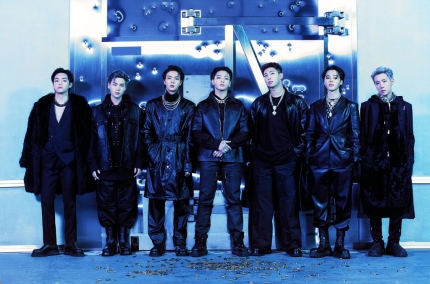
Fans around the world are paying close attention to the date and venue of BTS’s concert, after they were appointed as ambassadors for the 2030 Busan World Expo. The concert will be the first full-fledged performance that they have had since announcing the suspension of the group’s activities. With this news, tens of thousands of fans from their “ARMY” are expected to travel to Busan to see them.

According to the Kookje Newspaper, BTS’s 2030 Busan Expo Concert is expected to be held in mid-October. Ever since the appointment ceremony for BTS’s on the 19th of last month, the Expo Bid Committee, Busan City and BTS’sagency “HIVE” have been discussing the date and location of the event. 

Some candidates for the event include the Busan Asiad Main Stadium, Samrak Ecological Park, and North Port.  

ARMY members are already starting to book an accommodation in Busan in time for the BTS concert. 

The city expects thousands of ARMY members to visit Busan for a short period of time while BTS is here and is considering ways to expand transportation services such as trains and subways.
In fact, ARMY members from 197 countries participated in the BTS online concert last year, and more than 170 BIE members attended. 

Following Busan’s concert to bid for the 2030 Busan World Expo, BTS will also attend on-site inspections from the International Exposition Organization (BIE) and share promotional videos via their official social media platforms.

Library Membership

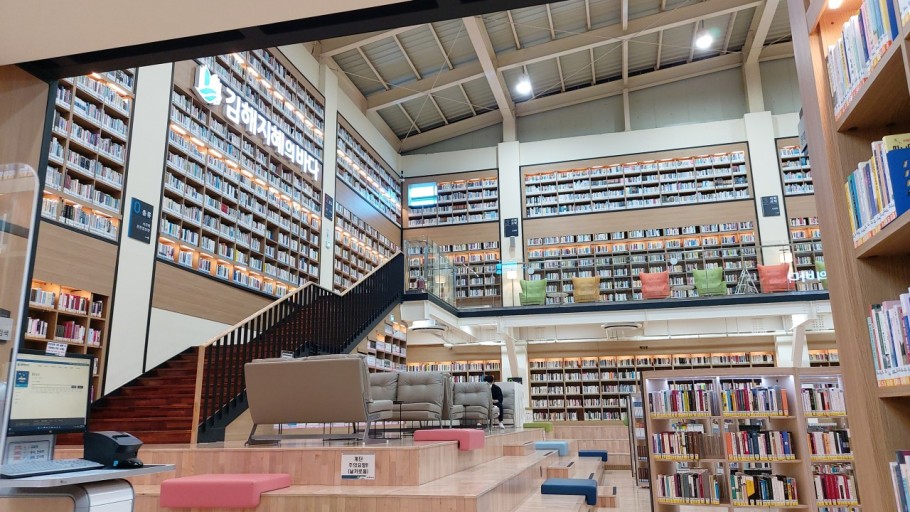
Q: I enjoyed listening to you last week. The information about how to use Busan libraries was very helpful. Can I also get a library membership card even if I am a foreigner?

A: If you are an expat living in Busan and if your address on your alien’s card shows that you are Busan resident, you can get a library membership card.

It’s not difficult at all to apply for this ‘이음’ card.

You can do it at any library in Busan.

It just takes about 5 minutes and the librarians will help you if needed.

If you get a membership card, you can borrow five books at a time for two weeks.

The last Wednesday and Friday of each month are considered ‘Cultural Day’ aka 문화가 있는날.

On those days, you can borrow 10 books at a time.

The best thing about using a public library in Busan is that you can return your borrowed books to any library in the city.

Taking Your Kids To The Library

Q: I live in the Nam-gu district, Busan, but can I still use the children’s library in the Suyeonggu district?

A: Of course you can.

All of the public libraries in Busan are managed under an integrated system, aka 통합 시스템.

That means you can use any library in Busan.

And once you have a 이음카드, you can borrow and return books to any library in Busan.

이음카드 is not a credit card, but instead a library membership card.

You can apply for one at any library in Busan.

In just about 5 minutes you will have your own library card and can begin using the public library system.

Almost every gu-district has a children’s library.

Each one has a wide variety of books including traditional stories, modern fictions and imported English books. Go check them out.

Warning as Jellyfish Appear on Imrang Beach

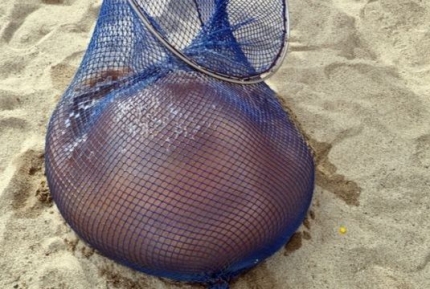
Large jellyfish that recently appeared in Jeju have also appeared on a beach in Busan, causing dozens of vacationers to get stung. 

According to 119 water rescue teams at Imrang Beach in the Gijang-gun district, Busan, about 30 jellyfish which were spotted at around 8:30 am continued to be seen until 3 pm on August 6th. Some were even as long as 3 meters. 

About 50 vacationers who were swimming in the water were reportedly stung by jellyfish. They were treated at the scene and no one was seriously injured.

Photo Taken by News1

7 Korean Idioms Related to Body Parts

Different cultures around the world use idioms to refer to parts of the body. This makes it easier to get ideas across during conversation. However, these phrases do not always have to do with the body. We Koreans use idioms a lot, so let’s learn some of them.

1. 입이 무겁다

‘입이 무겁다’ is directly translated to, “Someone’s mouth is heavy” or “Someone has a heavy mouth.”

You can describe a person using this idiom if they keep a secret you trusted them with.

But, if someone can’t keep a secret, we say “입이 가볍다.” This phrase is literally translated to: “The mouth is light.”

2. 입이 거칠다

‘입이 거칠다’ means, “Someone’s mouth is rough” or “Someone has a rough mouth.”

This idiom is used to describe someone who swears and curses often.

3. 손이 크다

‘손이 크다’ is literally translated to, “Someone’s hand is big” or “Someone has a big hand.”

This idiom is often used to describe a woman who has prepared a big portion of food. For example, a great occasion to use 손이 크다 would be if a mother of four cooked enough food to feed ten children.

4. 귀가 얇다

This directly translates to, “Someone’s ear is thin” or “Someone has a thin ear.”

If someone is very indecisive or easily influenced by other’s opinions, this idiom can be used to describe them.

5. 통이 크다

It translates to, “Someone’s torso is big” or “Someone has a big torso.”

When we say someone has a big torso, it is usually considered a compliment. This idiom can be used to describe a person who is willing to spend a lot of money on themselves or others.

For example, if a group of people went out to dinner, the person who volunteers to pay the bill would have a “big torso.”

6. 발이 넓다

It literally translates to, “Someone’s feet are large” or “Someone has large feet.”

We will sometimes even say “마당발이다,” which means “to have front-yard feet”.

Any of these idioms can be used to describe someone who has made many connections through networking.

7. 콧대가 높다

‘콧대가 높다’ means, “someone’s nose is held high” or “someone has their nose held high.”

Actually, if Koreans say, “you have a big nose,” it could be meant as a compliment. A small face with a large nose and eyes is considered beautiful in Korea. Even though it might come across as rude to comment on other’s appearances, many people still do it.

But “콧대가 높다” has more than one meaning. If someone is arrogant or “stuck up” you could use this idiom to describe them.