Chang Keeryo, the Korean Schweitzer

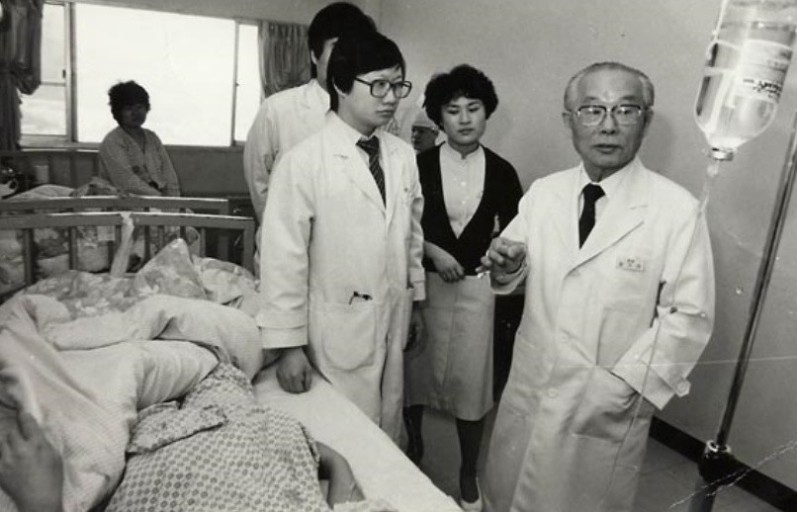
There is a man who is called the Korean Schweitzer, but his real name is Chang Keeryo. He was a very special HERO in Busan.

He was born in a small city near Pyongyang, North Korea in 1911.

But back in 1911, South Korea and North Korea’s relationship was not what it is like today since this was before the Korean War (1950-1953).

In 1928, Chang Keeryo attended Kyungsung Medical School, which was the first westernized medical school to train Korean doctors. The school was founded in 1899, which was also the final year of the Joseon Dynasty.

However, things started to change in 1910, when Korea was under Japanese rule.

Beginning that year, many Japanese surgeons came to Korea to be professors at Kyungsung Medical School. It became very difficult for Koreans to find work being a professor. Equally difficult was the acceptance of Korean students at Kyungsung Medical School because Japanese professors favored Japanese students.

Chang Keeryo was one of the very few Korean medical students to attend the school. Later, he went on to graduate at the top of his class in 1932.

That year, he got married to Kim Bongsook and chose a stable career.

A few years later, he went back to school to get his Ph.D. at Nagoya University. He returned to Korea in 1945 when it became a newly freed country. As soon as he returned, he was appointed as the General Director of Pyongyang District Hospital and became a professor at Kim Ilsung Medical School.

He was the ONLY doctor who had PhD in North Korea at the time.

Everything went smoothly until the hospital where he worked was bombed during the Korean War.

After fleeing the explosion, Dr. Chang joined a group of refugees heading to Busan.

By that time, he was a father to three children and his second son was the only one who was with him. Unfortunately, his wife and two other children were left behind in North Korea.

Guess what he did first after arriving in Busan?

Well, he asked the U.S. army to let him use three of their tents. These tents were transformed into hospitals with one being called the “Gospel Hospital.” There he tended to countless refugee and homeless patients.

The Gospel Hospital later moved to the Yeongdo-gu district.

Patients from all over the country flocked to the clinic to receive care that was all paid for by Dr. Chang.

Generally, doctors make a well-deserved paycheck. However, Dr. Chang never spent money on himself. He only lived in a small rooftop room located in the hospital where he worked.

Later, he founded the Blue Cross Medical Cooperative in 1968, South Korea’s first ever medical cooperative. It was a private medical insurance program with more than 200,000 members. It wasn’t until 10 years later that the government introduced a national medical insurance program. Still, the Blue Cross Medical Cooperative is considered the best model for Korea National Insurance System.

That same year, he also founded Gospel Professional Nursing School.

Although he was already recognized as a competent surgeon, he studied with graduate students to catch up on all the up-to-date medical breakthroughs. Through such efforts, he greatly contributed to the development of medicine in Korea. He was the first one to succeeded in performing the first liver lobectomy in Korea.

But unfortunately, he lived a lonely life. He missed his wife and children so badly and always made sure to keep a photo of himself and his wife in his room. Tragically, he never had a chance to see his family again.

He passed away in 1995 at the age of 84.

To remember his devotion and hard work, “Chang Keeryo Memorial Hall” was opened on Ibagu Road (이바구길) in the Choryang-dong (초량동) area. If you are interested, please check it out.

Three Interesting Facts About Korean Names

  1. The Most Common Last Names in South Korea

The name “Kim” comes in first with 21.5% of South Koreans being named this (this is more than 10 million people). The name “Lee” takes second with 15% and “Park” follows at 8% respectively. 

Yuna Kim / Haesoo Kim / Jenny Kim

Speaking of last names, Korean women do not change their family name after they are married. 

2. Most Korean Names Consist of Three Syllables. 

The family name comes first, while the given name with two syllables comes next. 

For example, if a there is a person named, “김민영”김 Kim is her family name, and Min-Young is her given name. Minyoung Kim, Min Young Kim, and Kim Minyoung all refer to the same person. There are some people who have only one syllable or three syllables in their name. For example, “김민” [Min Kim] or “김이로운” [Kim E-ro-un]), still, they are pretty rare. 

3. Most Korean Names Can Also be Written in Chinese Characters.

Koreans use Chinese characters (aka Hanja), but how we read these characters differ from how people on the mainland read them. 

  • Side note: The number of non-Koreans living in South Korea is on the rise, though, it’s safe to say that South Korea is a mono-ethnic country. According to recent statistics, the number of foreigners was 1.6 million as of this year, which accounted for a little more than 3 percent of the whole population.

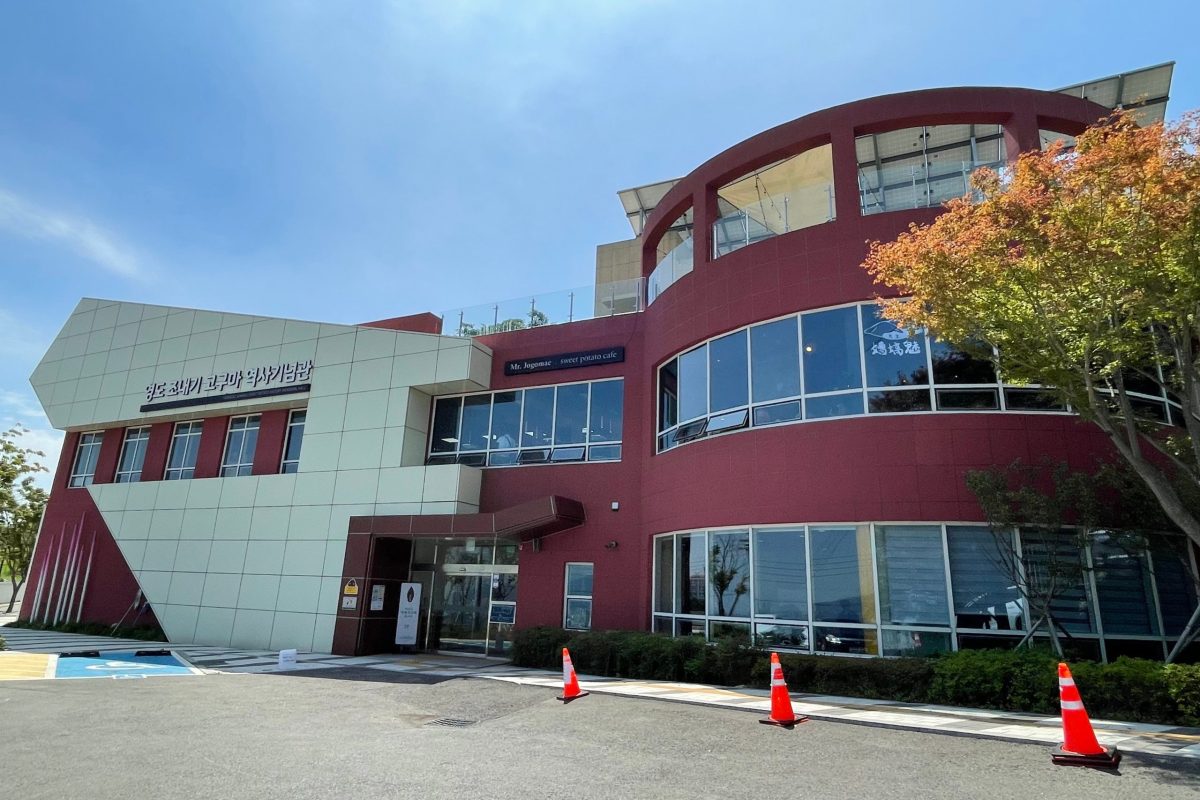
Yeongdo Jonaegi Sweet Potato History Museum

It’s September already, and soon it will be starting to feel like autumn. There is a Korean expression that describes the season of autumn.

It is “Chun-go-ma-bi (천고마비)”. People say, “it is the time of Chun-go-ma-bi.” Have you heard this expression before, and can you guess its meaning?

Chun – Sky

Go – High

Ma – Horse

Bi – Fat

It literally translates to, “the sky is high while the horse gains weight.” Simply put, it means “autumn is a good season to go outside and eat!” Since autumn is the season of harvesting goods, there is a lot of good food to enjoy.

By the way, did you know that there is a sweet potato history museum in Busan? Well, there is! So let me tell you about the history of how sweet potatoes came to Busan.

Yeongdo Jonaegi Sweet Potato History Museum

It goes back to 1764 during the reign of King Yeongjo (영조) of the Korean Joseon Dynasty.

King Yeongjo

Joseon Tongsinsas were then diplomatic envoys sent to Japan at the request of Japanese officials.

This group was made up of diplomats, scholars, artists, and doctors. The group toured Japan – from Tsuhima Island all the way to Edo, which is today’s Tokyo. According to records, one group of Joseon Tongsinsa consisted of around 450 people, and they were all well-liked by their neighbors.

They were like the rock start we have today as they set international trends. Because of them, hundreds of horses, art pieces, stationery, books, and agriculture products were brought to Japan. In return, they we able to bring sweet potatoes from Japan.

Joseon Tongsinsa

During the 40th year of King Yeongjo’s rule, King Yeongjo sent a diplomatic mission to Japan. Jo Eum (조엄) was the chief envoy over the mission. According to reports, 477 people traveled with him. Jo eum soon found sweet potatoes in the northern parts of the Tsushima Island. He loved the taste of them and thought that if Joseon people could grow sweet potatoes in their backyard, they would not have to worry about having enough food to eat.

So, he had one of his officials named Lee Unghyuk (이응혁) carry a few sweet potato slips back with him. (Did you know that sweet potatoes do not have seeds like most other vegetables. Instead, they produce something called a slip, which can be planted like a seed!) However, Lee failed to keep the slips from rotting on his way back home.

Meanwhile, the Dongrae (동래) city official, Kang Pilly (강필리) found out that Jo had discovered

sweet potatoes in the northern parts of the Tsushima Island and that the sweet potato slips carried by Lee could not be replanted. He could not wait to grow and enjoy his own sweet potatoes. He had people go and retrieve more slips from Tsushima Island. This time the slips made it back to Busan without any issues.

The first sweet potatoes were planted in the Yeongdo-gu district of Busan in the spring of 1765 in the Naegi area. To remember Jo’s effort in bringing sweet potatoes to Korea, Kang decided to put his last name “Jo” before “Naegi.” That is how the sweet potatoes were named “Jonaegi sweet potatoes.” People believed that sweet potatoes grown in that area tasted the best. That’s why Jonaegi sweet potatoes are still the most popular sweet potatoes in supermarkets in Korea.

Meanwhile, the Dongrae city official named Kang spent a lot of time researching sweet potatoes.

He even published his research in a book. The title of the book was “Gamjeobo (감저보).” Sweet potatoes are now called Goguma (고구마), but back then, they used to be called Gamjeo (감저). Interestingly, potatoes are called Gamja in Korean. So, when sweet potatoes were first brought to Korea, people probably named the sweet potatoes Gamjeo by changing one vowel in the word Gamja.

Anyways, thanks to Kang’s book, people from different regions have started to grow sweet potatoes.

So check out the Jonaegi Sweet Potato History Museum located in Yeongdo to find more information. There is also a café that serves sweet potato inspired drinks and baked goods. My favorite is the homemade soy milk served in a kettle! Twice a month, a cooking class is held for kids to join.

Address: Cherry Blossom Road 75, Yeongdo-gu, Busan

Hours: 10 am to 6 pm (Closed on Mondays and national holidays)

Admission: Free

How to get there: Take bus 101 at Busan Train Station. Get off at Yeongdo Bridge. Transfer to village bus number 7 at 청학 [Cheonghak] gas station and then get off at 동조 Dongjo Regency. (You will climb one of the steepest hills on your way to the museum! )

Wedding Rings

Please don’t assume that someone is married if you see a wedding ring on their ring finger. It is common for single ladies to wear a ring on their ring finger simply as a fashion statement.

Vice versa, don’t assume that someone is single if you don’t see a wedding ring on their ring finger.

Most times, people will buy a wedding ring for their ceremony, but not wear it daily.

Plus, I have noticed that the brand name of the ring is more significant in Korea rather than the size of the gem. People prefer big names like Van Cleef & Arpels, Cartier, Chaumet, Tiffany & Co and many more. This is quite the opposite in the US.

[Emily Wilbourne] Busan Trip Reflection

Amidst the uncertainty of the COVID-19 pandemic, when so many of students’ opportunities to study abroad and conduct fieldwork were interrupted, I was lucky enough to successfully travel to South Korea twice. My first visit, in Fall 2020, I traveled as a study abroad student and was enrolled in Sungkyunkwan University. During that semester, I stayed in Seoul the entire time – I was too cautious to travel around the country and find myself contact-traced to a COVID case, or worse, become sick myself. However, during my second time in the country the following summer, I had more freedom, as during this visit, I was not travelling as an exchange student, but as a researcher.

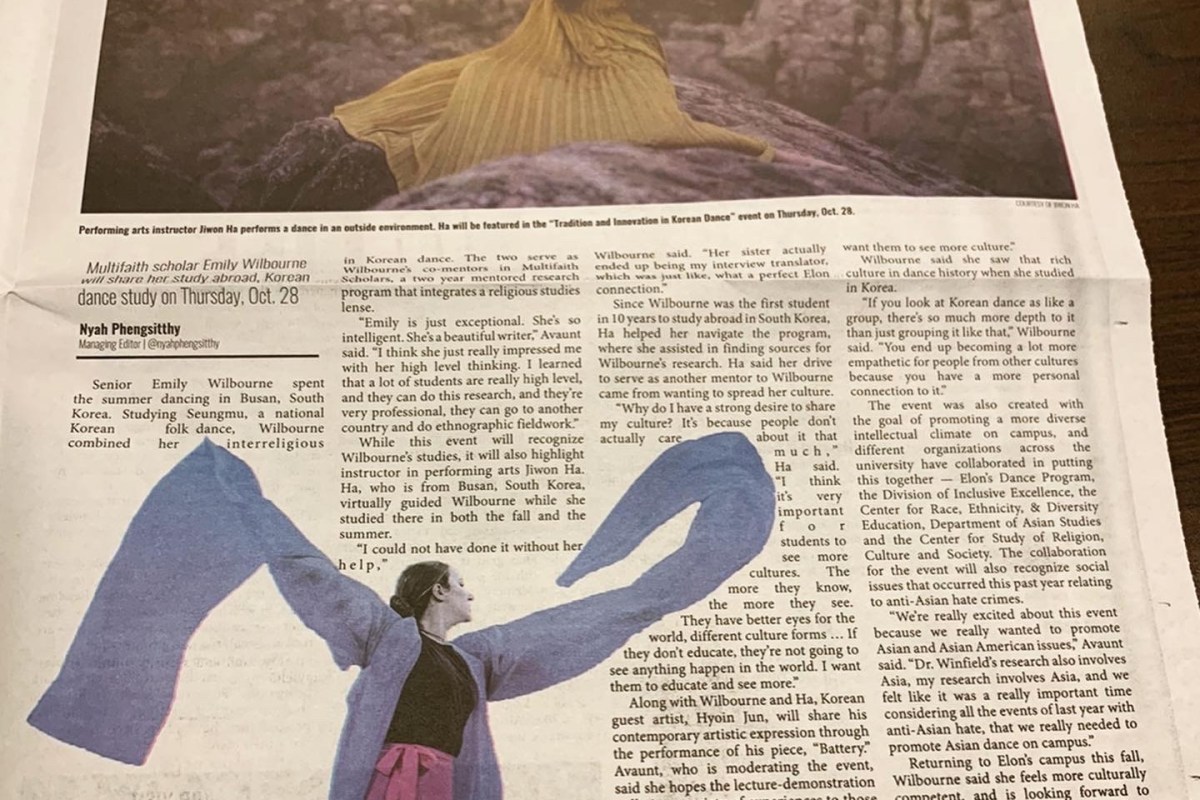
In summary, my undergraduate research was concerned with seungmu dance. This dance form, unique to Korea, has a history going back to as early as the 7th century, and was once performed exclusively by Buddhist monks. However, in the modern day it is a secularized intangible national treasure of Korea, that is preserved as a folk dance to represent Korean national identity. My research aimed to illuminate seungmu’s transition from religious to secular dance through a combination of historical research, interviews with seungmu performers, and participant observation in the dance form myself. To do this, I had to travel to Busan, South Korea. Factoring in quarantine time, my initial plan had been to work in Busan for six weeks, with my first two weeks spent in the mandatory quarantine that was in place for all travelers entering South Korea.

Though the focus of my trip was centered around completing interviews, making connections with seungmu dancers, taking dance classes, and recording field notes, I was greatly assisted by a professor of dance at my home university and a native of Busan, Jiwon Ha! She was able to assist me and recommend the best cultural sites to visit in and around the Busan area. In between doing my research work, I was able to visit several of them. Among these, my visits to the Haedong Yongungsa Temple, Busan Art Museum, Gamcheon Culture Village, and two performances at the Busan Gugak Center were the standout activities of my trip. Though slightly outside of Busan, our excursion to the Bulguksa Temple in Gyeonju was also a highlight.

As a scholar of Korean Buddhism, the opportunity to walk around both Haedong Yongungsa and Bulguksa were an amazing experience for me. Haedong Yongungsa, an oceanfront temple with sprawling cliffsides, multiple ornate buildings, elaborate pagodas, hiking paths up to beautiful ocean overlooks, and many stone and golden Buddha and boddhisattvha statues, was breathtaking. I found myself floored by the scale, beauty, and age of this well-maintained religious site. For both Buddhists and non-Buddhists, I think that the spirituality embedded in the Haedong Yongungsa campus shines through. I would consider this ocean temple a must-see location for any visitor to Busan. Even despite the oppressive heat of the Korean summer (I believe it was near 95 degrees fahrenheit/35 degrees celsius the day I visited!), I felt the hike around this site to be completely worth it.

At the time of my trip to Busan I was also majoring in arts administration in college, and so my visit to the Busan Museum of Art was a special experience. Featuring displays of contemporary art of a variety of mediums, I was impressed by the range of art on exhibition as well as the architecture of the building itself. It wasn’t a huge art collection but was clearly curated with care and thoughtful intention. Any lover of contemporary art would enjoy an afternoon walking around this museum.

The Busan Gugak Center features performances of traditional Korean music and dance regularly – including seungmu – which is one of the reasons I selected Busan as the city to focus my research and interviews in. The tickets for these performances were very affordable and I was able to see performances there on two separate evenings. Both times, the roster of performances showcased music and dance based in traditional Korean arts and featured a variety of stages from different Korean dance traditions. I was truly blown away by the scale, talent, and artistry that the production pulled off for these shows and was also pleased that, for both evenings, the audience was full of other people appreciating these preserved art forms.

Individually, I also travelled to the Gamcheon Cultural Village, which delighted me. There is a helpful visitors center there, which features English-language pamphlets on the history and revitalization of the village. For someone who’s Korean is limited, the ability to walk comfortably through this colorful village at my own pace, without having to ask for help with navigation or pay anything to enter, was very welcome. However, in order to best appreciate the landscape, geography, and spectacle of the village, I do recommend that any traveler takes the time to buy a drink or snack from one of the many cafe’s that feature a rooftop patio and pauses to enjoy overlooking the vibrant landscape. I personally indulged in a much-needed slice of cheesecake after several hours walking around and the sense of peace I felt enjoying it while sitting on the rooftop patio of a small cafe and taking in the scale of the area is one of my fondest memories of all of my time in Korea.

For part of my trip, I was also staying in a hostel within walking distance from Haeundae Beach and enjoyed walking around the beachfront there each morning to exercise, relax, and start my day. Altogether, Busan was a beautiful place to visit. Between the mountains and oceans, temples and theatres, art and culture, and everything in between, it’s a city that has a lot to offer and I’m so grateful I had the opportunity to enjoy a small piece of it during my research travels.

On top of sightseeing, the main motivation for my visit, my research, was also a success and a publication of my final article is forthcoming this Fall! While my trip was unfortunately interrupted by several obstacles – extra quarantines, rainy weather, COVID-19 curfews and limitations – I think my experience proves that a memorable trip can still be made out of difficult situations.

The History of Jeombachi Alley

Today, I would like to tell you about a small town in Busan that used to be bustling with fortune tellers.

Btw, have you ever been to see a fortune teller? My friends and I visited one once in our early 20s after graduating from university and starting our first jobs.

You know… everyone worries about something while in their 20s… My friends and I were no exception. We were worried about our futures and felt that we needed guidance on some of the more important choices we would have to make.

So, another one of my friends told us about an older lady who was the best fortune-teller in Busan.

More than ten years have passed since my last visit and believe it or not, most of her predictions were fairly accurate. The fortune-teller said that I would have many chances to speak in front of large crowds, which is true now that I have worked for a radio station. I don’t know if everything happened by coincidence but visiting a fortune teller was not as bad as I thought it would be.

Let me get back on topic…

There used be a town in Busan filled with fortune tellers.

The town was located under the Yeongdo Bridge and used to be called “점바치 골목 or Jeombachi Alley.”

Any ideas what Jeombachi (점바치) means?

Korean for “a fortune teller” is 점쟁이 [Jeom-jang-ee]. People in Busan speak with a Busan dialect. Speaking with a Busan dialect, “점쟁이” was “Jeombachi”. (But personally, I’ve never heard anybody say “Jeombachi”.)

Do you know what the Yeongdo Bridge meant to Koreans during the Korean War?

Busan was one of the only cities not captured during the Korean War, so millions of refugees gathered here for safety. Back then, the Yeongdo Bridge was a very important place, because it was where many refugees promised to reunite with their loved ones.

So, why do you think people visit fortune tellers?

People visit fortune tellers for many reasons, but most commonly because they need guidance through a dilemma.

After the Korean War ended, people struggled to survive. They were faced with the uncertainty of the future. So they visited Jeombachi Alley.

The fortune tellers there provided them with a peace of mind. Then, by having their futures predicted via their star, palm, Saju (사주), or by cards, it gave them a sense of security.

Back in the 1950s and 1960s, there were more than 50 fortune teller shops in “Jeombachi Alley”.

When refugees visited a fortune teller, they asked things like, “where and when can I find my sister, Mija?” or “Should I continue living in Busan?”

But now, Jeombachi Alley doesn’t exist anymore.

So why are there very few fortune tellers left?

Some fortune tellers have died of old age or have been asked to stop their practice.

Due to a redevelopment plan, the remaining fortune tellers, who had spent 40 to 50 years of their lives under the bridge, were asked to move out. It was in 2013 when the last fortune teller left the area.

Instead, new cafes, bakeries and restaurants have been built in their absence.

But many people raised their voices in support of Jeombachi Alley, because it’s intangible cultural heritage.

The City of Busan planned to move “Jeombachi Alley” to Eurari (유라리) Square, a small square located next to the Lotte Department Store in Gwangbok-dong.

So, in 2016, the government called upon a few fortune tellers who were interested in starting a fortune-telling business in Eurari Square, but some vendors who already worked at the square protested these plans. They did not want to share the space with the fortune tellers.

In the end, Jeombachi Alley simply disappeared.

Some Common Dreams and What They Mean

Many Koreans believe that our dreams help us predict our future.

Good dreams are called 길몽 and bad dreams are called 흉몽.

Some 길몽s (good dreams) include things like pigs and poop. For example, if they appeared in someone’s dream, he or she would buy a lottery ticket. Even dreaming about being murdered is considered a good thing, often meaning a good change is coming.

However, dreaming about losing a tooth (or teeth) is considered to be one of the worst dreams, as it could mean there’s a chance of losing someone in your family.

Meanwhile, there’s also a dream called ‘태몽’. This is a dream that predicts the birth of a baby. Sometimes, what appears in ‘태몽’ helps predict the gender of the baby. For example, if a tiger appears in a dream, people assume that the baby will be a boy. If the dream is about picking fruits or shells on the beach, people assume that a girl will be born.

James Grundy, a British Veteran Will be Buried in Busan

According to the Namgu-district in Busan, James Grundy, a British veteran who served on the UN military body recovery team during the Korean War has died at 91 of cancer during the early morning of the 10th (local time).

According to Grundy’s will, his remains will be moved to Busan and buried in the UN Memorial Park alongside his comrades. He has also been granted posthumous burial by the International Commission of the UN Memorial Park.

An official at the UN Memorial Park said, “the body is expected to arrive from the UK sometime this month and the funeral will be held at the UN Memorial Park either in September or October.”

Grundy who fought in the Korean War in 1951 helped recover the bodies of around 90 British, US and South Korean soldiers during his service. Then, he returned to the UK in 1953 where he remained until his next visit to South Korea in 1988 with the Ministry of Patriots and Veterans Affairs’ revisit program.

Over the next 30 years, he would travel back to South Korea annually to take care of the UN Memorial Park. However, he was unable to visit Korea for two years due to the COVID-19 outbreak.

After his long-awaited return last May, he was able to hold a lecture here in Korea. In recognition of such hard work, Grundy was chosen as an honorary resident of the Namgu-district in May of 2019. An honorary citizenship was then scheduled to be given to him this October.

The Song We Sing at Baseball Games

Are you a fan of baseball? Honestly, I do not know that much about baseball, but I am still a Lotte Giants fan.

There is a quote that says, “you don’t choose your family. They choose you.”

It is like how you can’t choose who your family is, you can’t choose which baseball team to cheer for. If you were born in Busan, you are supposed to cheer for the Lotte Giants. That’s that.

Let me tell you a little bit about the team song that the Busan fans chant at each game.

It’s called ‘Busan Seagull’.

Many of these songs have lyrics that inspire victory and excitement such as the verses “we are the champions” or “we will rock you” by the band Queen.

But Busan Seagull is not like other songs.

This song was sung by Moon Sungjae (문성재) and was released in 1982. This was not meant to be the Lotte Giant’s theme song, but it was adopted later into the development of the team.

Here are the lyrics to 부산 갈매기:

파도치는 부둣가에 지나간 일들이 가슴에 남았는데

Every memory we had near the port remains in my heart

부산 갈매기 부산 갈매기 너는 정녕 나를 잊었나

Busan Seagull Busan Seagull, have you really forgotten me?

Obviously, the song is not all about victory, but when cheering for the Lotte Giants, the meaning of the words and their connection to the team is not what is most important. How the song makes the team and Busan citizens feel is all that matters.