The pink seats that are right by the entrance of each subway car are reserved for pregnant women.


The pink seats that are right by the entrance of each subway car are reserved for pregnant women.
Recently, the MBTI personality tests have been so popular in Korea.
So you may often get asked, “what is your MBTI?”


Blood type personality tests were popular a decade ago, even before the MBTI personality test emerged. Back then, people with O blood types were considered to be the most outgoing and extroverted. On the other hand, people with A blood types were considered to be more introverted and quiet. 


A long time ago when Koreans did not have modern bathrooms at home, people were not able to take daily showers.
So, back then, 등목 or “splashing cold water on someone’s back” was a great way for people to take a quick shower.
Fyi, 등목 is the abbreviation of 등 목욕 meaning “back bath.”
The image above demonstrates the old tradition. 
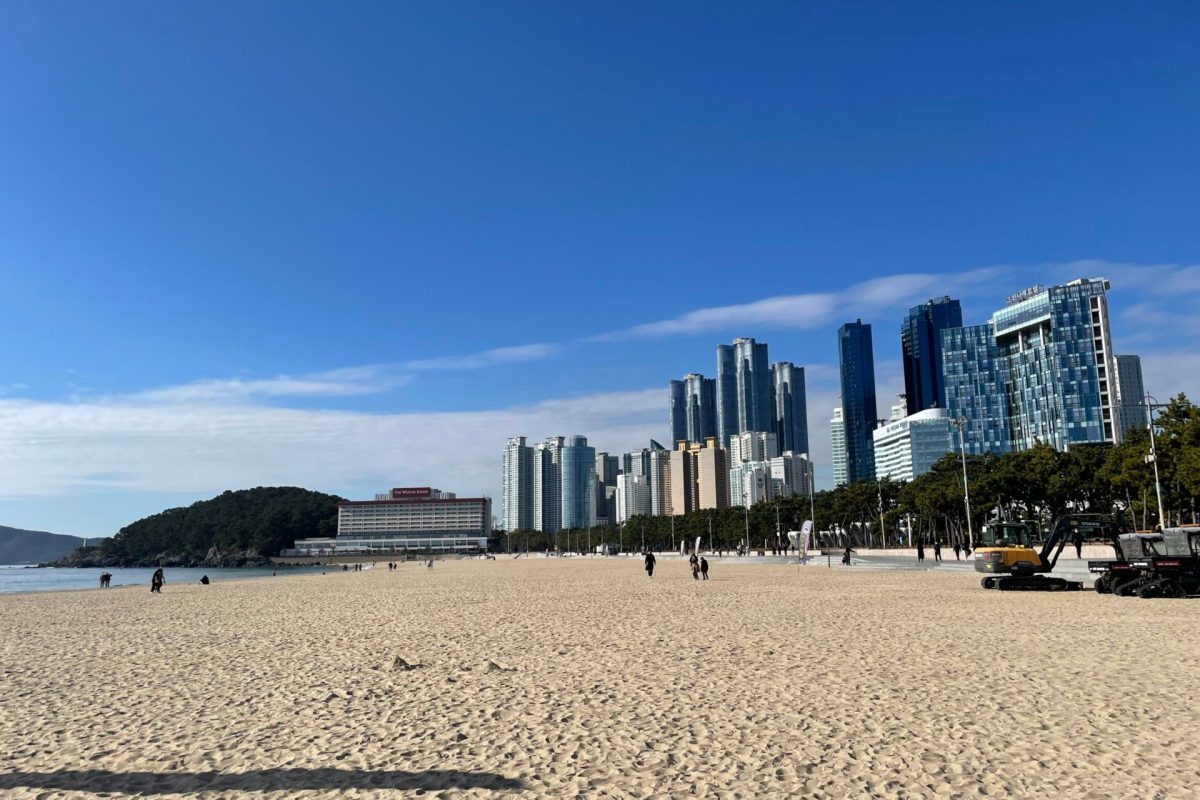
Now that summer is in full swing, Haeundae beach is super crowded.
Haeundae Beach is one of the most popular summer travel destinations here in Korea, but have you ever wondered how Haeundae beach got its name or what the word “Haeundae” really means?
Haeundae beach was named after the 9th century Silla scholar and politician Choi Chiwon (최치원).
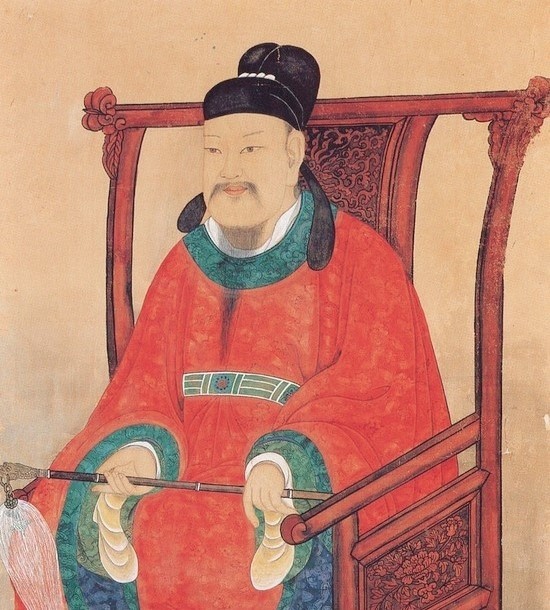
So let me tell you a little bit about who he was.
Choi Chiwon was born in 857 in the small town of Gyeongju, which was then the capitol of Silla.


At age 12, he moved to study in China. The Tang Dynasty was also very prevalent during this period.
The Tang Dynasty was one of the greatest dynasties in Chinese history.
Foreigners were even given the opportunity to obtain work permits.
When Choi Chiwon was 18, he passed the civil service examination for non-Chinese, and he quickly rose to a high office position from there.
That time in Korea was known as the age of Unified Shilla.
But unfortunately, the golden age of unified Silla was in decline. Corruption was beginning to taint their society.
Choi Chiwon put it upon himself to help correct what had been broken.
With a plan to make a difference, he came back to Korea.
After returning to Korea, he became an instructor at the Shilla’s Confucian Hallim Academy.
He was later appointed to the chief envoy of a diplomatic association with Tang Dynasty. Soon after, the Tang Dynasty fell and Choi Chiwon was unable to travel back to China.
Back then in Shilla, there was a bone rank status system, called 골품제도.
This was also known as “the Caste System of South Korea.”


It was used in the Shilla Kindom to publicize a person’s political and social status, place of birth, and where a person belonged.
Based on this system, some people were allowed to apply for select jobs or live in certain areas, while others could not.
People were not allowed to move from one class to the other under this bone rank status system, which resulted in a stagnation of talent.
Choi Chiwon belonged to 6두품 class, which meant he was qualified to hold scholarly positions in the royal offices, but not able to become a high minister.
He was restricted to a particular level of office no matter the circumstances.
He then submitted the “Ten Urgent Points of Reform” to Queen Jinseong (진성) in 894, only to have it be rejected.

It was a tough time for Choi, because he had to accept that there was a ‘glass ceiling’ over the official bone-rank status system of Shilla.
He ended up quitting his quest to fix society and instead unlocked a new passion for traveling the country.
He left his post at Gyeongju to allow himself to freely travel.
After leaving Gyeongju (경주), Choi Chiwon wandered around the southern coastal region of the Korean peninsula, including Ulsan, Busan and more.
There are many places that have been associated with him along the southern coast.
Along with Haeundae, Cheongyongdae (청룡대), which is situated on the border with Gangseo-gu (강서구), and Molundae (몰운대) near Dadaepo beach all got their names from Choi Chiwon.


When he came to Haeundae, he wandered around Dongbaek island.
It is said that he was so fascinated with the beautiful view of Haeundae Beach from on top of a hill on Dongbaek Island, that he engraved one of his literary names, Haeun, on a rock there.
The name Haeun means ‘Sea Cloud’.
So, this is the story of how he named the beach “Haeundae” over 1,000 years ago.


Fun fact: A piece of Choi Chi-won’s calligraphy, which he engraved on a rock at Haeundae, still exists.
A lot of people go to Dongbaek Island for a nice run or walk, but not everyone knows that it is still home to a statue of Choi Chi-won that is located at the top of the park.
Only a few records remain from Choi Chiwon’s middle to late years.
In his final years, it seems that Chiwon turned more towards Buddhism and became a scholar, residing in and around Haeinsa (해인사) Temple located in Hapcheon (합천).


Big chain supermarkets like Homeplus and Emart must close on the 2nd and the 4th Sunday of each month.
This is because of the government’s project to revive traditional markets and small businesses.


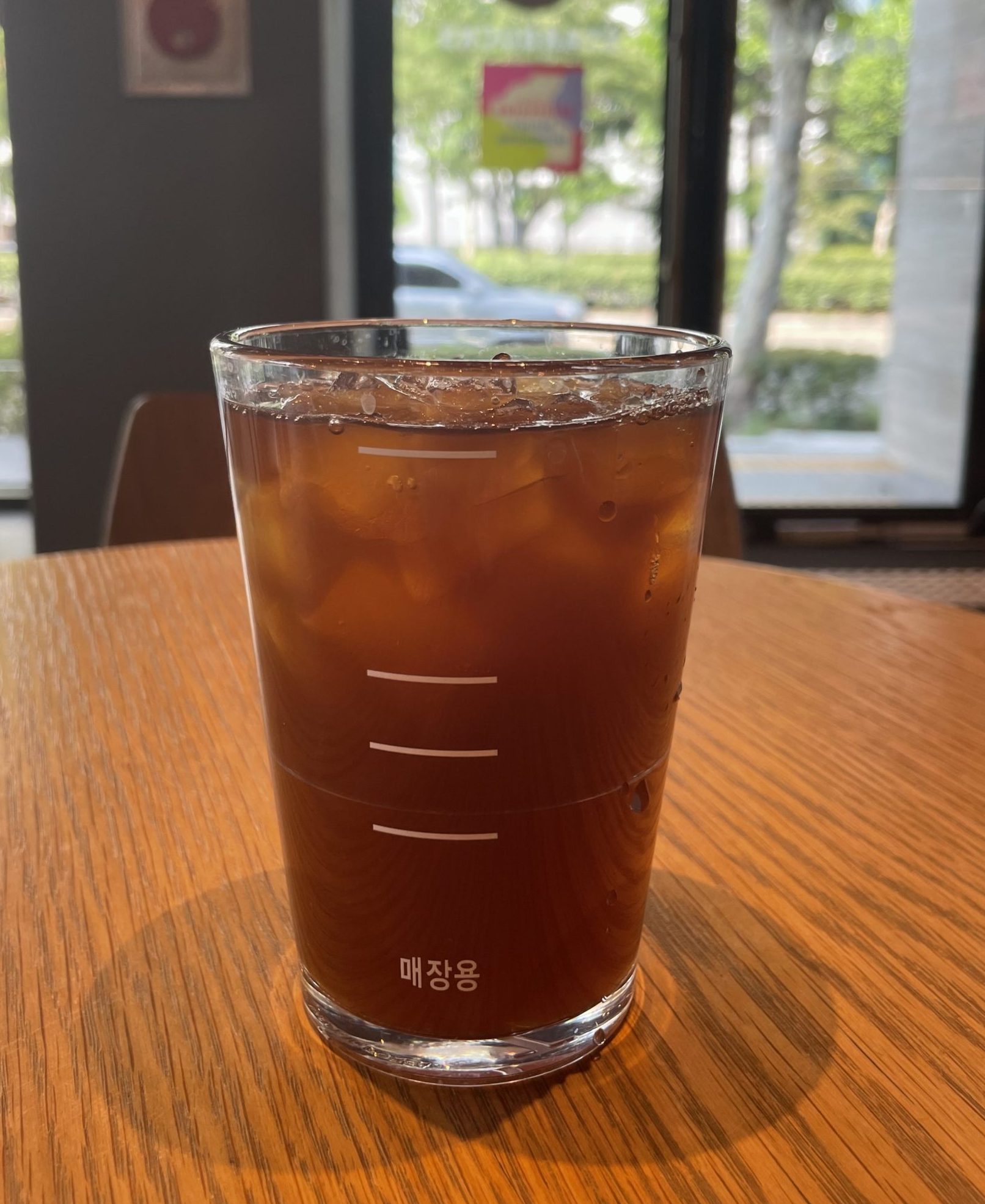
At a coffee shop, you can’t use a single-use disposable plastic cup if you dine in.
You can only use a disposable cup if you take your order to-go.
Even if you are to leave the café within minutes of sitting down you must use a reusable cup as this rule is enforced by the government.
I admit, it’s inconvenient from time to time.
Sometimes I wish employees were more flexible with this rule, but policy is policy, and the store could get in trouble if they made exceptions.
It could be just me, but it sometimes feels like we are living in a crazy time.
Although times may feel a bit too crazy, we have always overcome in the past.
One thing that pops in my head is the IMF crisis, so let me tell you about it.


It was in November, 1997 that South Korea was hit by the crisis.
That year, South Korean companies were in bad conditions, having difficulty paying off their loans, so the South Korean government had to beg the International Monetary Fund (for a 58 billion US dollar loan)
That year, the Korean government revealed that Korean companies owed 200 billion US dollars.
Back then, the crisis in Korea was rooted in its 재벌 Chaebol .
They wasted money in areas rooted in corruption.
The Chaebol in Korea had debt burdens three times that of other businesses in the developed countries.
Those Jaebeols failed to pay off their loans, and in turn went bankrupt.
The financial problem began with the collapse of Hanbo Steel.


Now we have forgotten the name of Hanbo… but back in the 1990s, it was Korea’s 14th biggest Chaebol.
That year in 1997, it was revealed that Hanbo’s debt was 22 times more than its net worth.
It’s reported that Hanbo’s Group had some 22,000 employees… but as the group went bankrupt, those employees lost their full time jobs.
After Hanbo, the Halla Group, Korea’s 12th biggest Chaebol went bankrupt.
So did Sammi, Jinro, Daenong, Kia…
It was like a domino effect, one by one each corporation fell.
You won’t believe what I am going to tell you, but the next year in 1998, more than 2,500 companies in Busan also went out of business.
Tens of thousands of people lost their jobs as a result.
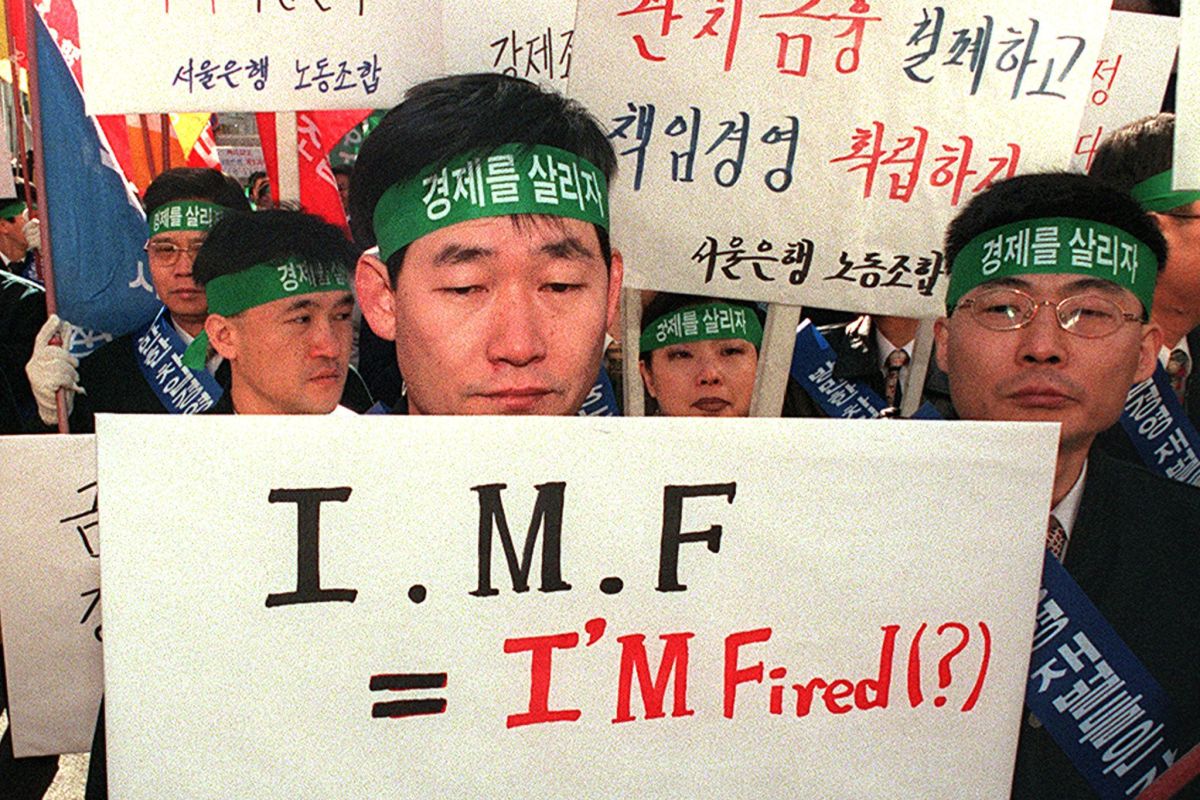
One thing I remember is that the acronym “IMF” in Korea was used in a different way.
IMF stands for International Monetary Fund.
But back then, many people said “IMF stood for I’M Fired”.


I was young when all of this began. Many of my classmates’ fathers were fired.
Some of them had decided to move to different regions, looking for a job and more affordable places to live.
As this all started in November, 1997, Koreans couldn’t celebrate Christmas that year.
No one was playing Christmas carols.
No one decorated a Christmas tree, either.
People stopped sending Christmas cards.
Christmas and life as we knew it was never the same, following the IMF Crisis.
I don’t think it’s an exaggeration to say that the Financial Crisis was a traumatic event for a lot of Koreans.
Some changes were inevitable.


Many fathers lost their jobs…
They couldn’t pay their children’s tuition fee for the next semester.
So a lot of university students decided to join the military.
And since private colleges and universities were more expensive than public schools, a number of students who took the Suneung exam in the year of 1997 wished to attend national universities, making the field more competitive.
And a lot of international students had to return.
During the IMF crisis, the US dollar became more valuable compared to the won.

On December 23rd, in 1997, 1 dollar was converted into 2,067 won.
Suppose that you are a Korean student who is studying in the states and that your parents are paying 2,000 US dollars in tuition fees.
Before the IMF crisis, your parents had to pay 2 million won.
But after the IMF crisis, those parents had to pay more than 4 million won…
During the IMF crisis, we tried to make a big change.
For example, newspapers had fewer pages to save paper.
TV broadcasting stations ran for less time to save electricity.
Stores replaced imported products with domestic ones.
Public holidays were canceled.
Elevators were programmed to stop at every other floor to save energy.
Hospitals delayed non-emergency surgeries.
Companies encouraged their employees to turn in dollars or yen if their employees had extra.
Many people had experienced inconveniences, but did not complain.
Instead, many Koreans waited in line for hours and hours to donate their gold jewelry to pay down the country’s IMF debt.


Athletes gave up their medals and trophies.
Housewives donated their wedding rings.
Thanks to them, Korea was able to make a profit of over 300 kilos of gold.
That way, we could overcome the financial crisis.
If you want to share your memories with me, please don’t hesitate to do so 
 Busan Travel & Living