What February Means to Many South Koreans

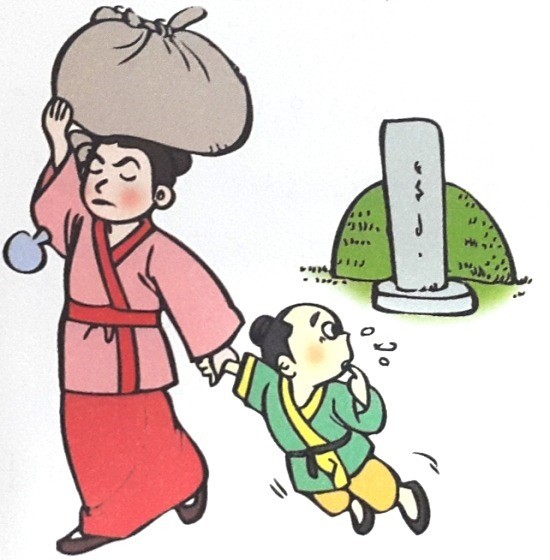
Time flies! We are already halfway through February. February is a short month, isn’t it?Somehow it always feels short to many Koreans. Let me explain why.

1. When kids go back to school after their long winter break, they only have about a week of classes in February until spring starts.

2. The Korean school year begins in March and gradution is held in February.

3. Often, the Lunar New Year fall in February. This also makes the month feel so much shorter.

My Life as an International Student in Busan [Naomi]

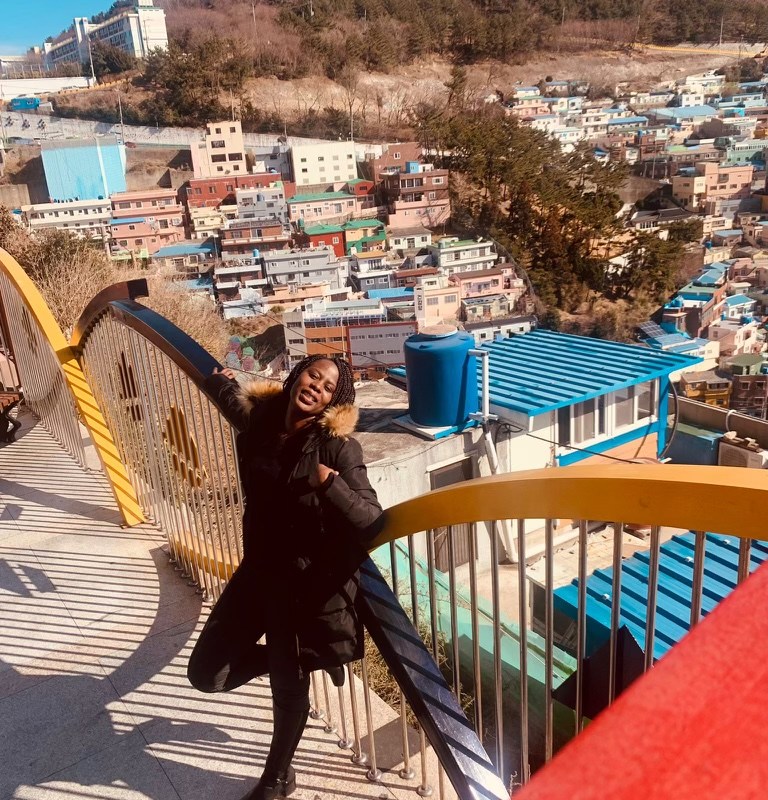
★Hello, my name is Naomi from Tanzania. I came to Korea five years ago on a Korean government scholarship. I graduated from Pukyoung National University last year as an international studies major.  

★Being an international student during the spread of COVID was not easy.  

Classes were held online and my opportunity to make new friends was limited. 

Often it felt like an unfortunate time to be an international student, but I was lucky to be able to stay in Busan during that time. 

★People always treated me with kindness and I was able to walk along the beach when I felt down. 

We have beaches in Tanzania, but the beaches here are different. In Tanzania the beaches always look the same, but here you can experience the charm of each season throughout the year, which I liked. 

★ I don’t know what my future holds. I may stay in Busan, return to Tanzania next year, or travel the world. Sometimes I wish I could bring the whole city of Busan to my hometown. It is safer, more modern and tech-savvy. Who could ask for more?

Cho Yongpil’s “Return to Busan Port”

Have you heard of the song, “Return to Busan Port” (“돌아와요 부산항에)? This song was sung by Cho Yongpil back in the 1970s.

Now it is recognized as one of Busan’s most representative songs, so when you have the chance to walk along the Haeundae Beach, give it a listen!
There is even a sculpture near the beach that has the lyrics written on it! Listening to the lyrics can help you understand some of Korea’s modern history. So, here is the song!

꽃피는 동백섬에 봄이 왔건만
형제떠난 부산항에 갈매기만 슬피우네
오륙도 돌아가는 연락선마다
목메어 불러봐도 대답없는 내 형제여
돌아와요 부산항에 그리운 내 형제여

The spring has come on the Dongbaek Island where the flowers are blooming.

But seagulls whose brothers have gone are just here to cry at the Busan Port.

No matter how hard I call you, my bro, you can’t answer.

Return to Busan Port.

In the 1960s, many Koreans left Korea to search for better job opportunities. Around 8,000 Korean miners and more than 10,000 nurses went to Germany in hopes of finding work. Many were able to make enough money to provide for their families back in Korea. The money they earned was essential in supporting their loved ones in such a poverty-stricken country.

The movie, 국제시장 or Ode to my Father may help you understand that part of Korean history!

Those who left Korea were not guaranteed to ever see their families again. It became easy for many of them to feel lonely and homesick. With no cure for homesickness, songs like “돌아와요 부산항에” or “Return to Busan” helped ease their sorrow.

Did You Know Trams Used to Run in Busan?

Is there a tram in your city? Here in Busan, we don’t use them. 

The only time that my family and I rode a tram was when we traveled to Vienna and Prague. I loved them. The trams ran pretty much everywhere, making it a fun and convenient way to get around the city.

Many of you might not know that there used to be a tram running through the heart of Busan, because there are no traces of it left in the city today. But let me tell you: Busan was one of three cities in Korea that had trams: Busan, Seoul and Pyeongyang.

The first tram line opened in 1915 here in Busan. The majority of people who traveled by tram were Japanese. In the early 1900s, many Japanese lived near the Choryang Weagwan area in Busan.

They loved to visit Dongrae area to enjoy the spa. So, to make their journey to Dongrae easier, they built tram lines between Jin-gu and Dongrae. It took about 20 minutes by tram to get to Dongrae from Jingu, cutting down on travel time.

But Koreans did not like trams…

There were a lot of misconceptions about trams, because they used electrical power. Koreans experienced a lengthy drought in the early 1900s. Right now it doesn’t make sense, but people back then believed that the overhead wires that powered the trams absorbed moisture and prevented rain showers.

Some incidents have occurred onboard a tram. In 1933, a man in his 70s was taking a mini trip to Busan from Yangsan. He was so startled after seeing a tram for the first time, that he jumped right onto the track. Although he was quite injured, luckily he didn’t lose his life.

In May of 1934, a baby was born on a tram. The mother, who was in her 20s was visiting her family from Ulsan. While taking the tram to the hospital, she gave birth to a baby girl.

Trams back then ran on two different routes; one was from Gudeok stadium to Yeongdo and the other went from Gudeok Stadium to Oncheonjang.

The trams moved so slowly that passengers were able to simply hop off at any point, whether they were at one of the 11 stations or not.

As time went by, Koreans changed the way they felt about trams.

In 1910 there were about 19 trams, but by 1957 there were 73.

The demand for trams continued to increase as they received more frequent passengers. By 1966 there were nearly 150,000 people who relied on the trams for transportation.

That year, there was about 1.4 million people living in Busan, which means that more the 10 percent of Busan’s population traveled via trams.

Trams, however, stopped operating on May 19th, 1968, due to the destruction caused by the Korean War. Salvageable tram cars were sold for cash.

However, if you go to Bumin Campus at Donga University in Busan, you will be able to see one of Busan’s trams that was made in Atlanta.

If you visit between 1 and 2 pm, you can go inside of the car.

Meet the Brown Cheese Lady, Ms. Eom Jeonmi!

A lot of food trends have gone viral on social media over the years. Although very few of them stay relevant. If I could guess, I think that the brown cheese waffle trend will remain popular. 

Norwegian brown cheese has been a huge hit online in Korea. It began when people started to post pictures of their Synnove brown cheese waffles and soon even Korean celebrities had joined in on the trend.

For example, Korean actor Ryu Suyeong, host of the show,“Fun-Staurant,” once made an episode centered around dishes that use brown cheese. Singer Kang Minkyoung from the female pop duo “Davichi,” mentioned on her YouTube channel how much she loved the idea of putting brown cheese on a croissant. 

Brown cheese became so popular that many companies wanted to collaborate with Ms. Eom Jeonmi, the lady who brought brown cheese to Korea. These companies included Krispy Kreme, Gongcha, SSG and more!

Q: What made you decide to bring Synnove brown cheese to Korea? 

Eom: I tried brown cheese for the first time in Norway when I was there traveling. After I returned home, I wanted to buy myself some brown cheese, but realized that it was not available at any store. Honestly, I am not a big fan of cheese, but there was something that I really liked about brown cheese. I was certain that other Koreans would also enjoy brown cheese, so I contacted a few dairy companies in Norway and discussed bringing it to Korea. After some persistent negotiating, I signed an agreement to acquire exclusive Asia commercial rights.  

Q: What is the most rewarding thing about your work? 

Eom: I would say that the most rewarding thing about my work is being recognized by the head of the company of Synnove in Norway. 

And as the first person to bring brown cheese to Korea, I was featured in many articles in Norway, along with Norwegian TV shows, newspapers, and magazines. 

Q: What are some challenging things? 

Eom: Two things came to mind. First, Korea’s dessert market has been growing, but trends are constantly changing, and it can be hard to keep up. Second, it’s easy for ideas to be duplicated.

Q: Now that 2022 is coming to an end, what do you have planned for the future

Eom: So far, we have been making the Korean version of desserts using brown cheese. However, we want to introduce more traditional Norwegian recipes that use brown cheese. 

Also, since we have the exclusive commercial rights for Asian regions, I would like to introduce brown cheese to our neighboring countries. 

That was Ms. Eom Jeonmi, who is known as, “The Brown Cheese Lady.”

If you feel like trying a brown cheese waffle, go for it!

Synnove brown cheese waffles are available on the first floor of the Haeundae Gunam-ro 29 road. 

Synnove is also available on floor B1 of the Shinsegae Centum City Department Store.  

[This is NOT a sponsored post]

[Kim Hyejin] Upcycling Designer

Meet Hyejin Kim, one of the first Busan-based designers to have launched an upcycled collection.

Before moving back to Busan, she spent 20 years working in the fashion industry in London.

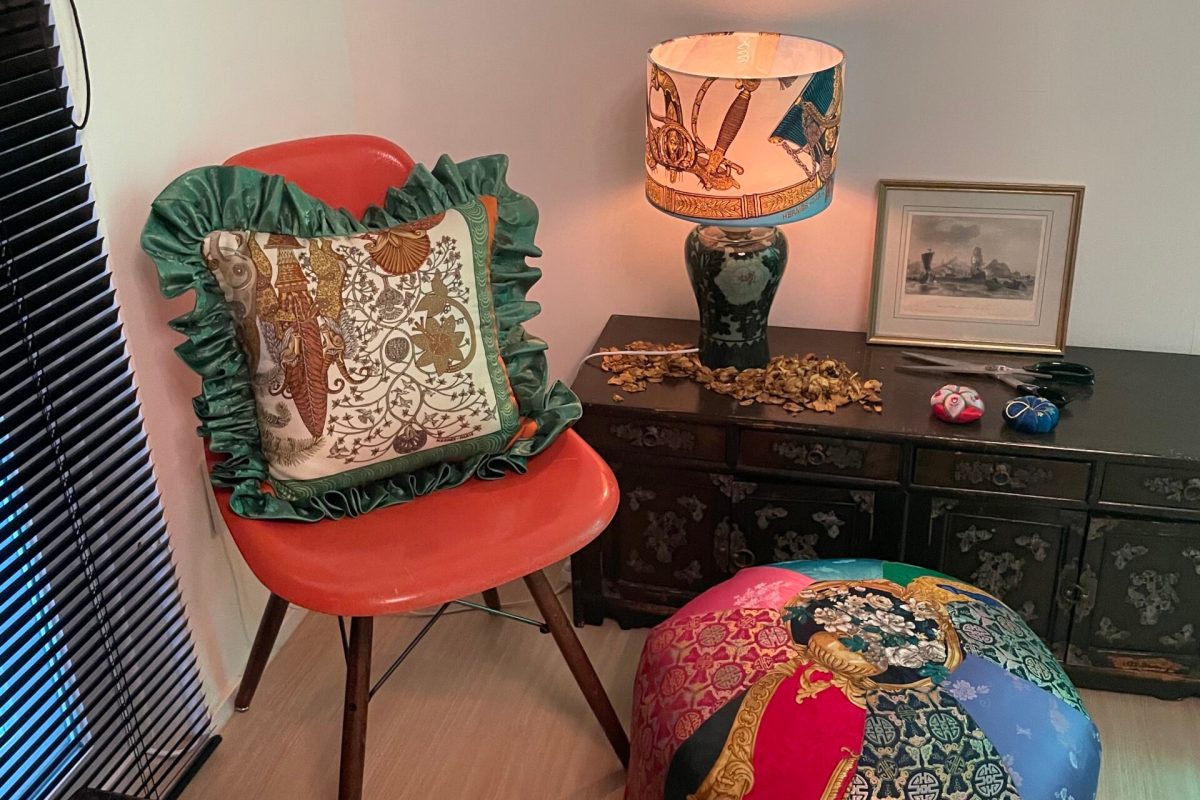
She takes inspiration from 80s fashion, which includes chain motifs, equestrians, tassels, ribbons, wild flowers and vintage silk scarves.

It wasn’t until 2019 that she began upcycling her pieces. Kim expressed that when it came to creating upcycled fashion designs, the possibilities were endless.  She upcycles everything from clothes to accessories to home décor.

She has showcased her works several times, mostly in Busan and in Seoul. Here are some of her pieces.

<Vintage Scarves that are Now Bags>

Recently, she released her new designs for the winter season. These designs are mostly made out of dead stock and hanbok cloth.

If you are interested in her work, visit her website and/or her instagram :theanaloglondon.com and @the_analog_london.

[This is NOT a sponsored post]

Interesting Idioms Describing Moms and Dads

1. 주말부부 (Weekend married couple) 

주말 means weekend while 부부 stands for a married couple. 

Can you guess what “weekend married couple” means? As you might have guessed, this phrase refers to a married couple who get to see each other only on the weekends. This may happen if the couple works in two different cities, or if a mother wants to raise her kids where there are better schools.
This term can also be used as a verb. For example, you could say, “나 어릴 때 우리 부모님은 주말부부 하셨어,” meaning, “when I was little, my parents 주말부부ed.”

2. 기러기 아빠 (Wild goose father) 

기러기 is wild geese while 아빠 is dad. “Wild goose dad” means a dad who is supporting his family while they live abroad.

Families sometimes send their kids overseas to English speaking countries so that they can get more opportunities and different education. Sometimes moms go with their kids to take care of them while the dads stay in Korea to support them. Unfortunately, this might lead to family issues and even social problems. 

So, “기러기 아빠” or “wild goose dad” is often used in newspapers, too. 

3. 엄빠 (Umpa = Umma + Papa) 

These days GenZs shorten every word possible, and “엄빠” is just one of them. 엄 refers to 엄마 (Mom) and obviously 빠 is from the word 아빠. 

So, when put together, it means “mama and papa.” Young people tend to casually use this word instead of “부모님 (parents).”

4. 맹자 엄마 (Mencius’s mom) 

Mencius is one of the greatest Confucian philosophers in China. It has been said that his mother moved over 3,000 times to find him the best education possible. 

So, moms who are super enthusiastic about their kids’ education are called as “Mencius’s Mom.”

Giving Money as a Gift

I have heard that giving money as a present is considered thoughtless in some cultures. However in Korea, it considered to be one of the best gifts you can give. This is especially true for weddings and funerals.  

At weddings, people will often gift the bride and groom around 50,000 won to 300,000 won before the ceremony starts. You are supposed to bring your gift in an envelope, but many couples will have envelopes avaliable at the enterance to the venue in case you forgot one.

At funerals, it is also common to give the grieving family 50,000 won to 300,000 won. This tradition is supposed to help the family pay for the funeral.

So, don’t be surprised when you see ATM machines outside wedding halls and funeral homes.  

From Fusan to Pusan to Busan

From Fusan to Pusan to Busan…

Featuring the Story of the First Korean Olympic Gold Medalist

Any idea who the first Korean Olympic gold medalist was? Well, Son Gijeong was the first! He won the gold medal in the marathon category at the 1936 Berlin Olympics.

However, he had to be a member of the Japanese delegation, because Korea was still under Japanese rule. Because of this, he was not allowed to run with the Korean flag or “Taeguki” on his chest.

He was not even allowed to use his Korean name and instead had to compete under the Japanese name, Son Kitei. Son Kitei was how the Japanese pronounced his name in Chinese characters since most Korean names could be written in “Hanja” or Chinese characters.

There is a 손기정 기념관 or Son Gijeong Memorial Center in Seoul that has 손기정 travel ticket from Berlin from Tokyo on display.

If you look closely at the ticket, you may notice that Son didn’t fly directly to Berlin. Instead, he used many different kinds of ground transportation. First, he took a ferry from Tokyo to Busan, then a train and a truck to Harbin, Warsaw, and finally one to Germany.

It took him a total of 15 days to travel to Berlin! Even though he was jetlagged, he still managed to bring home a gold metal.

Also, you may have noticed that his travel ticket spelled Busan with an F. This is because the Japanese used to spell Busan as Fusan when they occupied Korea.

After Korea gained its independence, Busan was spelled many different ways, but mainly with either an F or a P as the first letter.

Many people demanded that the city choose an official spelling before the Korea/ Japan World Cup in 2002. So, in 2000 Busan was officially named Busan.

Looking Back at the 1st BIFF 1996 [Featuring Five Interesting Facts]

We are only one week away from celebrating the 27th Busan International Film Festival (BIFF). Numerous movie directors, actors, actresses and movie fans will visit Busan during this time, making the city extra crowded. So, let me take you back to 1996 when the first Busan International Film Festival took place.

1. The first film festival was held on Friday, September 13, 1996, at the Suyeong Bay Yachting Center. To kick off the event, well known Korean actors and actresses including Shin Seongil, Kang Suyeon and Shim Eunha walked the red carpet while the Busan New Philharmonic Orchestra played “Return to Busan Port.” Since then, the festival has been held in October.

2. The festival’s opening night film was a 1996 British drama called Secret and Lies. This popular film, directed by Mike Leigh, starred Marianne Jean Baptiste and Brenda Blethyn. Blethyn was one of the few non-Korean movie stars who attended the first Busan international Film Festival.

3. Even though the film festival only showed 169 films from 30 countries, Busan was flooded with over 180,000 movie fans. People gravitated to the festival because it was not easy to watch foreign films in languages other than English at that time.

4. In the 1990s, restaurants and bars were not allowed to stay open past midnight in Busan. Most of the movie theaters in Busan were in Nampo-dong, which meant that people would often sit on newspapers and drink after a late film instead of getting to eat in a restaurant.

5. The Busan International Film Festival (aka BIFF) used to be called PIFF. Not until 2011 did movie organizers and city officials finally decided to change it to BIFF.